
The Talent Ecosystem: Redefining HR Strategy in 2026
Posted on March 12, 2026
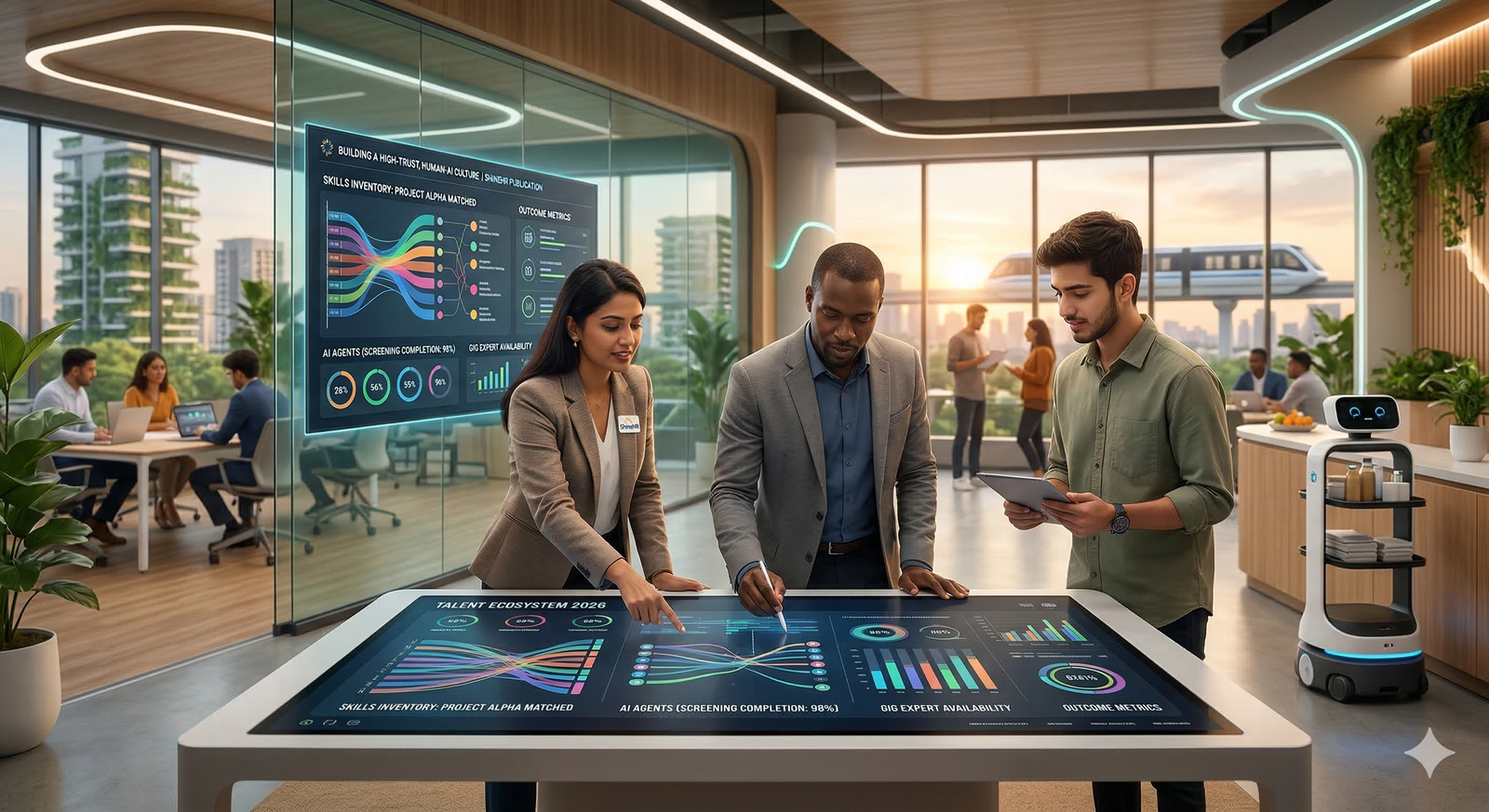
The era of the “static job description” is officially over. At ShineHR Publication, we’ve observed that the most successful organizations in 2026 no longer view their workforce as a fixed list of employees. Instead, they see it as a dynamic Talent Ecosystem—a fluid mix of full-time staff, AI agents, and specialized gig experts.
If your HR strategy hasn’t evolved since 2024, you’re not just behind; you’re losing your competitive edge. Here are the three pillars of the 2026 HR revolution.
1. Skills-Based Architecture vs. Role-Based Hiring
In 2026, degrees and job titles have taken a backseat to verified capabilities.
-
The Shift: Companies are building “Skills Inventories” rather than organizational charts. When a new project arises, AI-driven platforms match the required skills to the best available internal or external talent.
-
The Benefit: This eliminates “pedigree bias” and opens doors for non-traditional candidates who have the exact skills needed to deliver results.
2. The Rise of the “Human+AI” Work Design
We are no longer debating if AI will take jobs. In 2026, HR is focused on how to design roles where humans and AI agents thrive together.
-
Agentic Orchestration: HR’s new role is “Work Architect.” This involves identifying which tasks are handled by Agentic AI (like initial candidate screening or payroll compliance) and which require High-Empathy Human Intervention (like conflict resolution or culture building).
-
AI Fluency: Upskilling is no longer optional. Leading firms are implementing “AI Literacy” programs as a core part of their onboarding experience.
3. Radical Flexibility and “Outcome-Based” Management
The “Return to Office” wars of the early 2020s have settled into a new standard: Total Autonomy.
-
Beyond Hybrid: In 2026, it’s not about where you work, but the impact you make. HR has shifted from tracking “hours logged” to measuring “outcomes achieved.”
-
Proximity Bias Defense: ShineHR is seeing a rise in “Digital Equity” audits—ensuring that remote workers have the same promotion velocity and visibility as those who choose to visit physical hubs.
The ShineHR Outlook: Trust as the New Currency
As technology automates the routine, the “Human” in Human Resources has never been more vital. In 2026, the primary job of HR is to build a High-Trust Culture. In an age of deepfakes and automated outreach, authenticity and psychological safety are the ultimate retention tools.
Is your organization a “Talent Magnet” or a “Legacy Relic”? Stay tuned to ShineHR Publication for our upcoming guide on “Leading with Empathy in an Automated World.